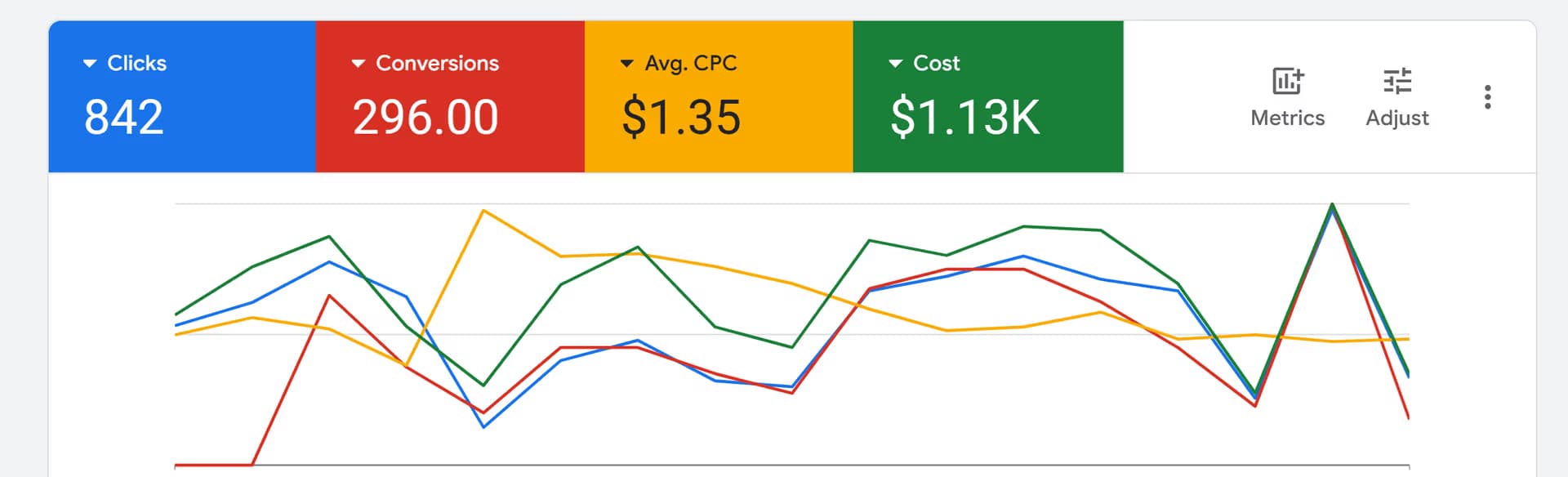
296 leads at $3.82 each for a plumbing business, with 35% of clicks converting
When a pipe bursts or a drain backs up, nobody spends an afternoon comparing plumbers. They call the first one that looks credible. For this plumbing business, every wasted click meant a job going to a competitor, so the account had to show up for the right searches and turn them into phone calls fast.
The situation
Plumbing searches are urgent, high-intent and heavily contested. Plenty of businesses bid on them, so clicks aren't cheap. At the same time, a lot of plumbing searches come from people looking up how to fix a leaky tap themselves, and paying for those clicks is money thrown away.
The goal was a cost per lead low enough to make emergency and service work properly profitable, not just break even.
What I did
- Built the account around emergency and service-specific searches that signal someone ready to book. A search for "emergency plumber near me" or "burst pipe repair" is worth far more than one for "how to fix a dripping tap", and the account structure reflected that.
- Wrote responsive search ads around what people want when something is leaking: 24/7 availability, fast response times and upfront pricing.
- Sent clicks to a landing page built for one action only, getting the customer on the phone or into WhatsApp before they had time to call the next plumber on the list.
- Tracked actual booking enquiries as conversions, not page views or button clicks, so every decision was based on real jobs.
- Kept optimising bids, negative keywords and ad copy. Underperformers were paused within days, and the winning keywords got more of the budget.
What happened
Over the campaign period the account produced 296 conversions from 842 clicks, at an average of $1.35 per click. Total spend was $1,130, which works out to $3.82 per lead.
The standout number is the 35% conversion rate: more than one in three people who clicked an ad became a service enquiry. That's well above what most home services accounts achieve, and it turned Google Ads into a predictable pipeline of paying jobs rather than a cost the business had to justify.
If you're in a similar spot
Three things drove these numbers: paying only for searches from people ready to book, a page built for instant contact instead of reading, and tracking that measured real enquiries. Most plumbing campaigns burn their budget on research traffic. Cut that out and the same budget goes a lot further.
Tools used
Want results like this for your business?
Let's talk